

Morena Duwe: An Question With Upcountry Pattern Entrepreneur Sandra Funk
Our homes are our most intimate spaces. They are where we unwind, entertain, grow up, find sanctuary and connect with the people closest to us. From the tiny, old studio apartments of New York City to the large suburban homes of New Jersey, Sandra Funk's East Coast-based design firm House of Funk creates beautiful designs that are both inspiring and inviting. Celebrating 10 years of beautifying homes with a full company re-brand from Funk Design Studio to House of Funk, the Funk team continues to pour all of their passion into every project, giving each client the care and attention they deserve. In this interview, we discuss her inspirations, creative process, favorite projects, new e-design service and more.
10 Wonders With... André Fu

André Fu has found a niche in the five-star Asian hotel sector. The designer and architect, born and based in Hong Kong, has completed an impressive range of urban hotels and resorts on the continent, including the Four Seasons Hotel Seoul, The Upper House in Hong Kong, and The Fullerton Bay Hotel Singapore. While his architectural studio, AFSO, builds an increasingly continent-spanning portfolio, his lifestyle venture, André Fu Living, takes on product collaborations with brands such as Lasvit and Tai Ping. Fu talks to Interior Design about his British schooling and favorite hotels.
Interior Design: What are some of your favorite places to stay?
Andre Fu: Parco dei Principi in Sorrento, Italy, a genuine vision by Gio Ponti that bears a holistic design language. Park Hyatt Tokyo, a timeless design that embraces the spirit of a new generation of sky hotels. And The Connaught, in London, for its intimacy.
ID: You’ve worked with prestigious brands like Four Seasons, Shangri-La, and Park Hyatt. What is the key to a successful designer-client relationship?
AF: The understanding that design is only a means to facilitate an environment. The operational methodology and the life infused into the every day plays a more important role somewhat.
ID: Where did you grow up, and how did it influence your work?
AF: I was born in Hong Kong but left for education in the United Kingdom as a teenager. Upon completion of my training in England, I was offered an opportunity in Shanghai that brought me back to Asia. I decided to set up my studio in Hong Kong in 2004.
My British training provided me with an intuitive understanding of the evolution of anything from classical to post-modernist architecture. My times in London and Europe also exposed me to different lifestyles and cultures.
I believe my upbringing—being influenced by the Western world, yet rooted in many values of the East—has empowered me to respond to design challenges in very different context.
ID: What are a few recent projects?
AF: Villa La Coste in Provence, France. Its signature spa, the library, and the Pavillon Louison restaurant are set atop the Luberon mountains to celebrate the world of art, architecture, and wine. Kerry Hotel is my largest commission to date, a 500-room hotel set on Hong Kong's stunning waterfront. I have always described hospitality design as a curation of experiences, and the sense of journey through a large property is particularly challenging—it is very much a balancing act.

ID: Which projects are you most proud of?
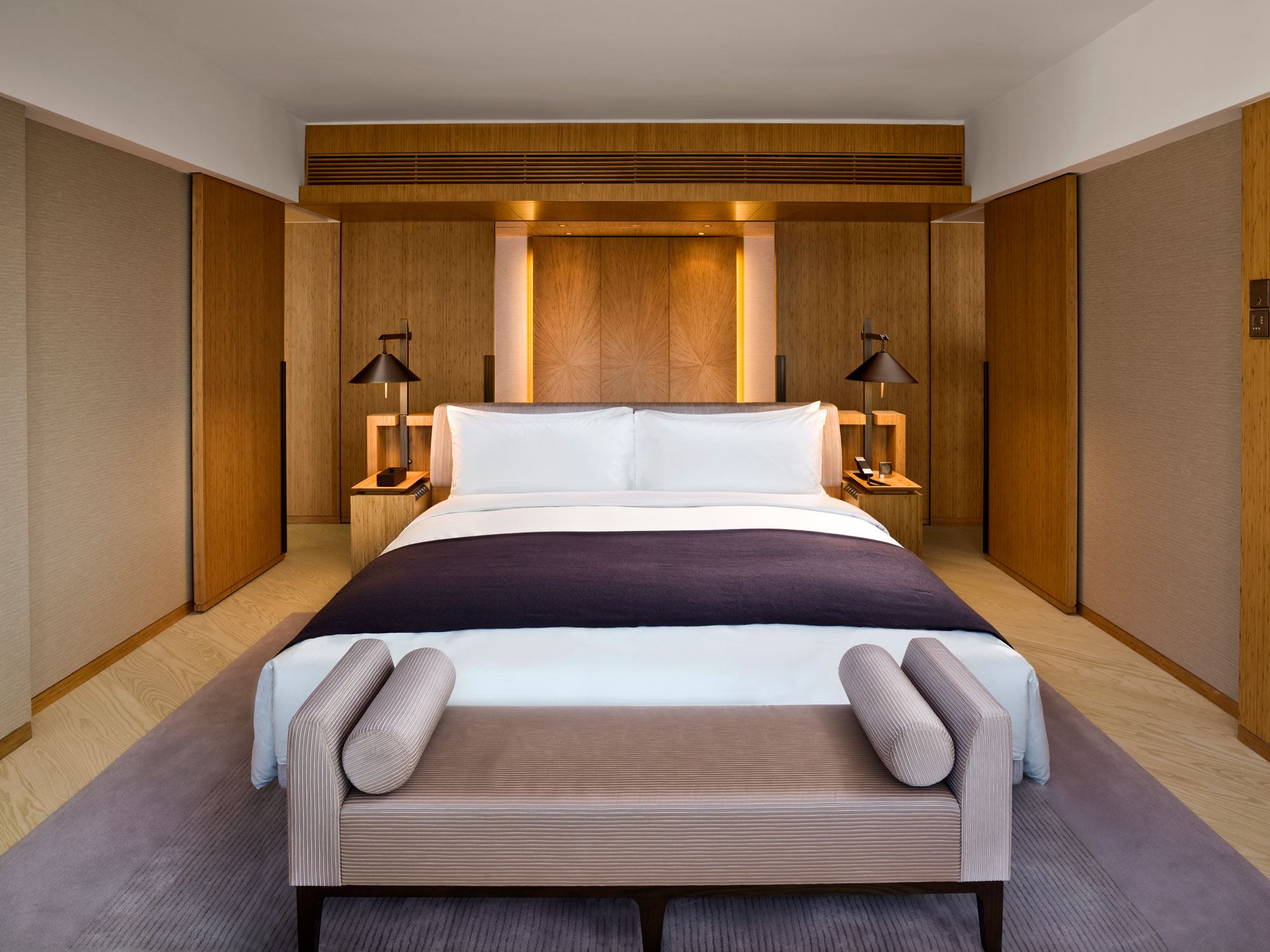
AF: The Upper House Hotel, Hong Kong, is an intimate hotel that embraces many qualities of where I see hospitality going forward. The hotel has dedicated its space to the guest rooms. As a result, we have created the largest hotel bathrooms in an urban environment, with a limestone-clad tub that offers immaculate views, as well as open showers that are extensive in size.
The lobby and public spaces are kept to a minimum and the entire hotel experience is highly bespoke.
ID: Which person, place, or thing—inside the industry or out—inspires you?
AF: Artists: Mark Rothko, Park Seo-Bo. Architects: Gio Ponti, Peter Zumthor.
ID: Most recently download app?
AF: Louis Vuitton City Guide.
ID: A secret source you’re willing to share?
AF: Minty Moment on Instagram.
ID: Dream commission?
AF: A public park. Perhaps I have always been fascinated with the possibility of landscaping—the layering that we can bring into the realms of a public park design and the potential engagement with the public on a day-to-day basis.
Mohamed Amine Siana
During its 44 years under colonial rule, Morocco served as a petri dish for experiments in modernism by French architects and planners like Jean-François Zevaco and Michel Ecochard.
Steven Harris Designers and Rees Roberts + Partners: 2016 Sound of Twelvemonth Victor for Beach Domiciliate
Simplicity itself. Practically monastic. This house by Interior Design Hall of Fame members Steven Harris and Lucien Rees Roberts is a 4,500-square-foot board-formed concrete box set on top of two piers. One pier is faceted, tapering to its smallest possible footprint. The other, partially embedded in the natural fall of a sand dune, is large enough to contain the garage. To ascend from the ground-level breezeway, the owners walk up a delicate staircase suspended on steel cables.
One third of Americans will be ineffective to yield urine charges in 5 twelvemonths
Michigan Lake Domiciliate past Desai Chia Architecture: 2016 Sound of Twelvemonth Victor for Land Domiciliate
A real-estate entrepreneur clipped and saved a newspaper story about Arjun Desai and Katherine Chia’s glassy weekend pavilion that won a Best of Year Award in 2013. The entrepreneur was intrigued by the way the house practically floated above its spectacular surroundings, a bucolic estate in rural New York—because he had just bought 60 acres on a remote peninsula jutting into Lake Michigan. Arguably even more extraordinary than the New York site, this one sits between a cherry orchard and a bluff plunging 120 feet down to the water. “The lake looks like the ocean from up there,” Katherine Chia notes.


For comfortable enjoyment of the scenery, the house’s butterfly roof extends 20 feet over a bluestone-paved terrace with an outdoor fireplace. Cor-Ten steel wraps the fireplace wall, while other exterior sheathing is 1-by-6-inch cypress boards finished with a traditional Japanese charcoal technique that naturally resists bugs and rot. The 4,800 square feet are massed in three volumes, grouped like the nearby fishing villages and joined by a glass-enclosed breezeway with doors at both ends for cross ventilation. Interior trim, flooring, and custom furnishings are ash logged on-site. Though used primarily for family vacations, the house features geothermal heating and cooling for efficiency year-round.


Project Architect: Huy Dao.
> See more from the December 2016 issue of Interior Design
3rings : Metalworker Organization Cascade Storehouse
Educators have found that children learn in a variety of different ways, so teachers often incorporate a variety of objects with varied tactile appeal to help students achieve their highest potential.

Smith System Cascade Storage solution recognizes the storage demands imposed by these new methods. Comprised of an ingenious system of lightweight, transferable “Totes” Storage Trays, Cascade makes it easy to move this diverse range of objects around—from storage towers to teacher desks to student desks and back.

The key is modularity. Each piece in the Cascade line is equipped with rails beneath the worksurface, enabling users to transfer individual totes from storage to desk, where they simply slide beneath for easy access.

In addition to towers, desks, and cubbies, Cascade also offers AV Stations and Maker Carts, featuring internal and external power access and ventilation for printers and other electronics.


Cascade comes in a broad spectrum of colors and finishes so users may outfit them in the school’s design scheme. See Smith System for additional information.
More from my site
BuzziJungle Engages Whimsy in the Common Office
FilzFelt Teams Up With Submaterial To Launch Modular Wallcoverings
Inside ICFF: 10 Cool New Finds
Brody WorkLounge by Steelcase
NEOCON 2016: ‘Laura’ by Davis Furniture
NEOCON 2016: 3form Translucent Color Portfolio
Bounce Stead past Bluarch: 2016 Sound of Twelvemonth Victor for Exclude/Loiter
Business deals used to happen on the golf course. Now, with the rise of the creative class, private clubs have cropped up in cities worldwide. At this one, principal Antonio Di Oronzo offers perhaps the most chic environment for those in the film, art, and design worlds.
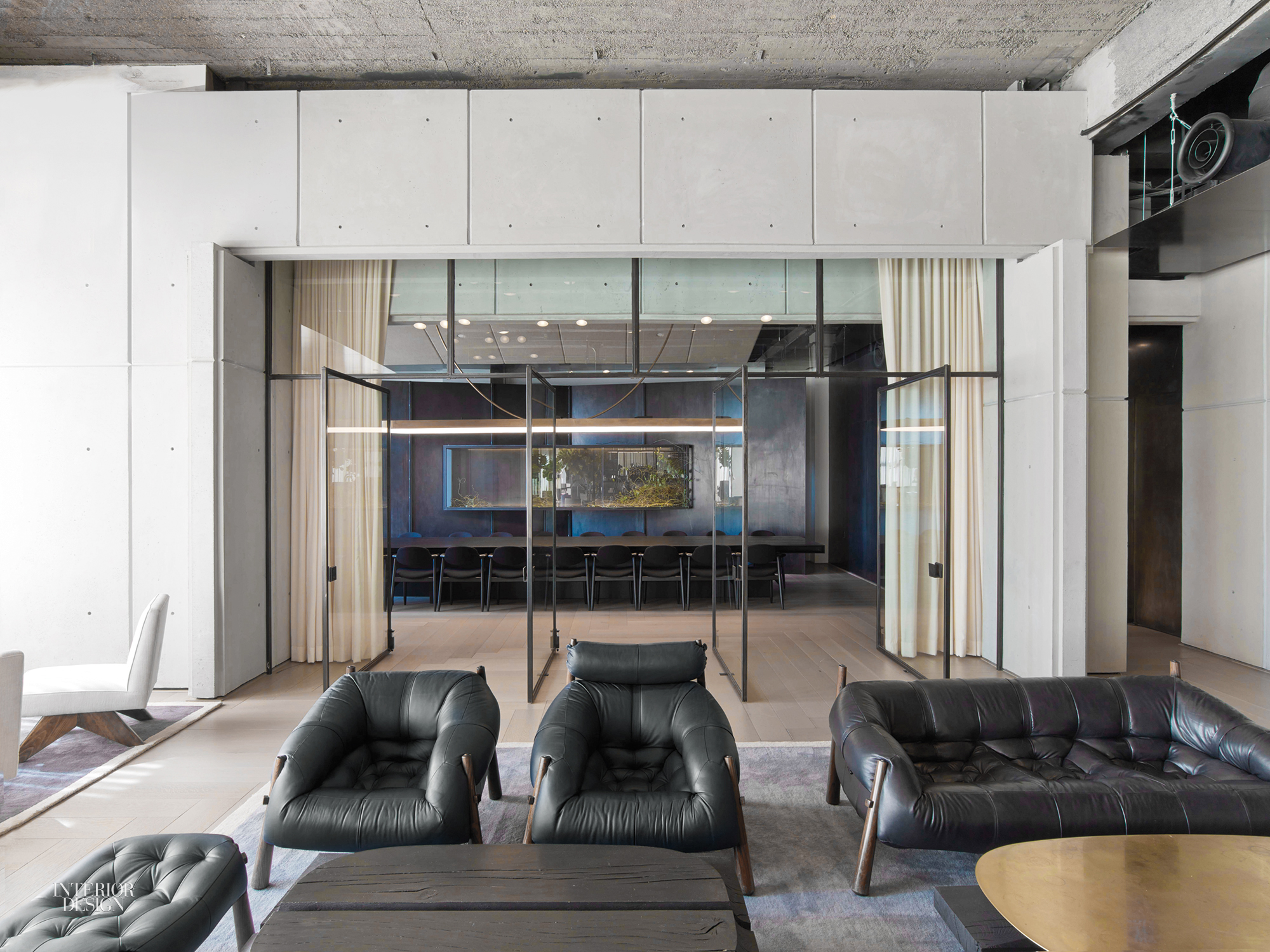
To create the perfect backdrop for members accustomed to attending fashion shows, movie screenings, and gallery openings alike, Di Oronzo looked to the rugged materials and strong forms of brutalism. “It’s about exposing the honesty of the materials,” he says, pointing out the cantilevered concrete forms throughout the club’s 12,000-square-foot social zone and adding that a fellow Italian architect was an influence. “Carlo Scarpa is a poet with concrete. It took me a while to understand him.”
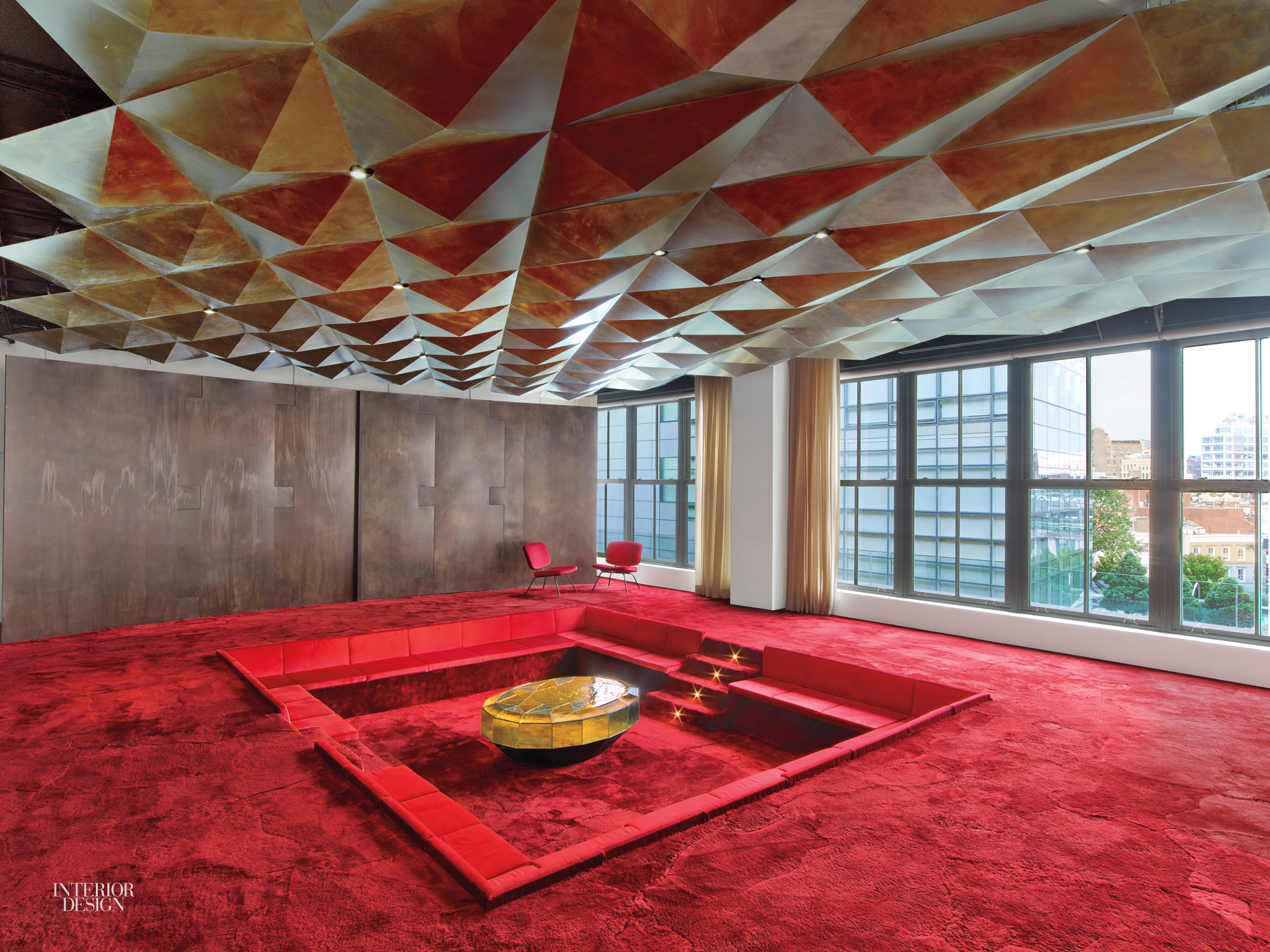

The overall palette of concrete, blackened steel, white oak, and glass is softened and glamorized in the events space, boasting an angular ceiling canopy in antiqued brass, a conversation pit, and deep-red sheepskin carpet—making you question whether you should be wearing shoes. Di Oronzo insists that sheepskin is extremely durable. “It’s what truck drivers use on their seats,” he says with a laugh. Though it’s doubtful any truck drivers have visited, we have confirmation that Leonardo DiCaprio has stopped in.

Project Team: Masashi Kobayashi; Juhee Chung.
> See more from the December 2016 issue of Interior Design
Gwen Stefani’s Domiciliate With Flightiness And Quirky Pattern
10 Superintendent Bowl-Upstanding Metiers Boards
Newsmaker: Ihsan Fethi
This Jordan-based architect is monitoring the ISIS-led destruction of historic sites and spearheading efforts to stop it. In a video that provoked outrage as it made its way across the Internet in February, men in military clothing ransacked Iraq’s Mosul Museum, toppling statues of ancient rulers from their pedestals before pounding the figures—some replicas but others original—with sledge- hammers.